☀ India’s sunscreen knowledge hub
Sunscreen gel guides for real Indian skin
Everything about sunscreen — SPF and PA++++, gel vs cream, oily, dry and acne-prone skin, tanning and pigmentation — researched, fact-checked and written for Indian heat and humidity by the team behind SeoulBloom.
Every guide is checked against
Find your match
Sunscreen for every skin type
Pick your skin type to see which textures, filters and ingredients work — and which to skip.
Why sunscreen matters
Why daily sunscreen matters for Indian skin
Daily sunscreen is the single most effective step for healthy, even-toned skin in India. Most of the country sits in or near the tropics, so UV levels stay high for much of the year. According to the World Health Organization, UV exposure is the main cause of skin cancers, and it also drives tanning, dark spots and early wrinkles.
Indian skin has more melanin, which offers some natural protection against sunburn. However, it is also more prone to tanning, pigmentation and melasma. That is why dermatologists recommend a broad-spectrum sunscreen every morning — even indoors, on cloudy monsoon days and in winter.
Understanding sunscreen: SPF, PA and broad spectrum
| Label term | What it means | What to choose |
|---|---|---|
| SPF | Protection against UVB (sunburn) | SPF 30 daily; SPF 50 for long outdoor hours |
| PA+ to PA++++ | Protection against UVA (tanning, pigmentation, ageing) | PA+++ or PA++++ |
| Broad spectrum | Covers both UVA and UVB | Always |
| Water resistant | Stays effective 40 or 80 minutes in water or sweat | For sport, swimming, heavy sweat |
| Non-comedogenic | Designed not to clog pores | Oily and acne-prone skin |
How to choose the best sunscreen for you
- Start with your skin type: gel for oily, cream for dry, fragrance-free for sensitive.
- Pick broad-spectrum SPF 30–50 with PA+++ or PA++++.
- Match it to your day: indoor, commute or long outdoor hours.
- Choose a finish you enjoy — matte, natural or dewy — so you reapply it.
- Check ingredients: niacinamide, hyaluronic acid and ceramides help; strong fragrance may irritate.
Types of sunscreen explained
| Type | Best for | Good to know |
|---|---|---|
| Gel sunscreen | Oily, combination, humid weather | Light, no white cast |
| Cream / lotion | Dry and mature skin | More hydrating |
| Mineral sunscreen | Sensitive skin | May leave a white cast |
| Tinted sunscreen | Pigmentation, melasma | Iron oxides help with visible light |
| Stick / spray | Reapplying on the go | Hard to apply enough on the face |
Want the full science? Read The Complete Sunscreen Guide or browse all sunscreen topics.
30-second quiz
Not sure which sunscreen suits you?
Answer four quick questions about your skin, concerns and daily routine. Get a personalised texture, SPF/PA target and morning routine.
Our daily pick
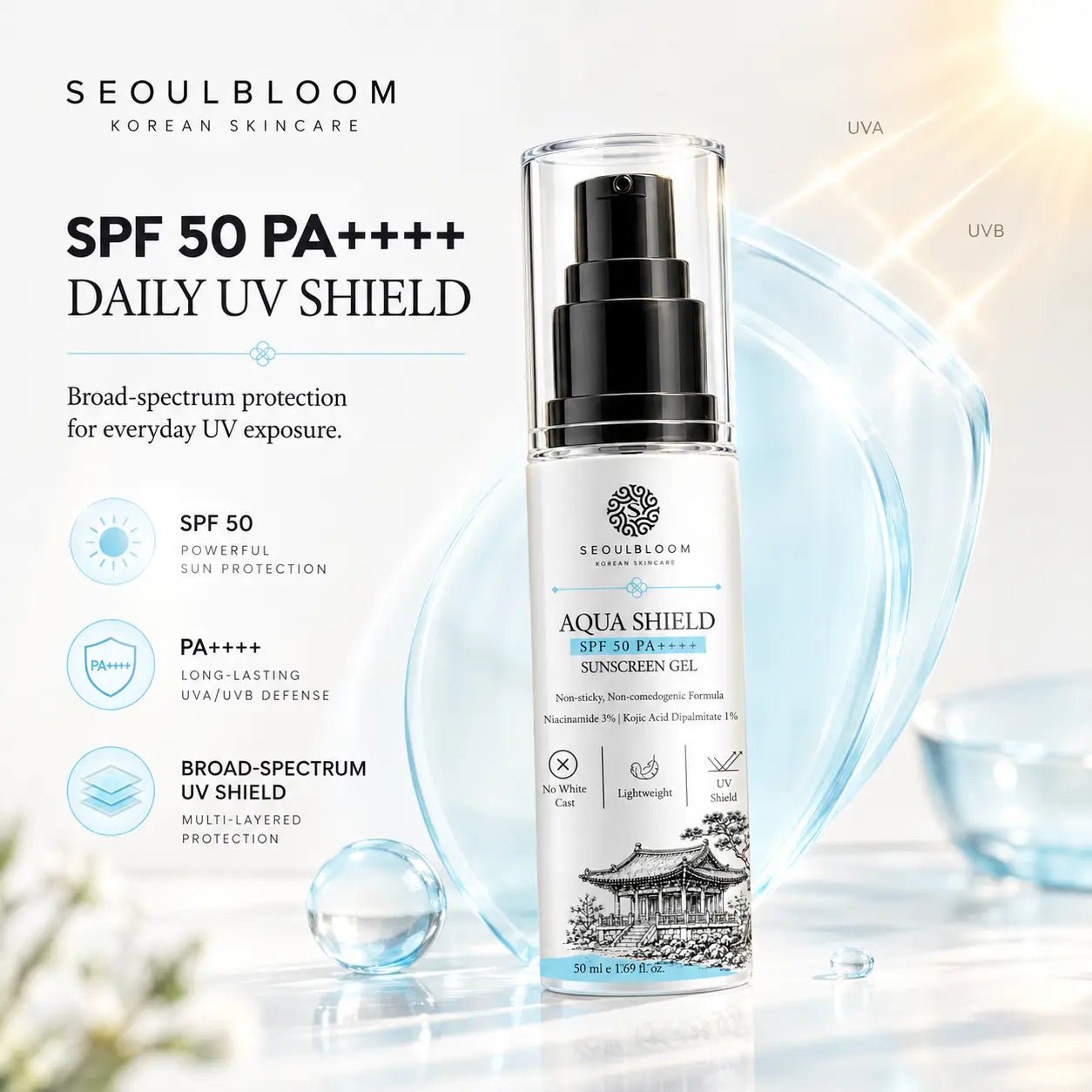
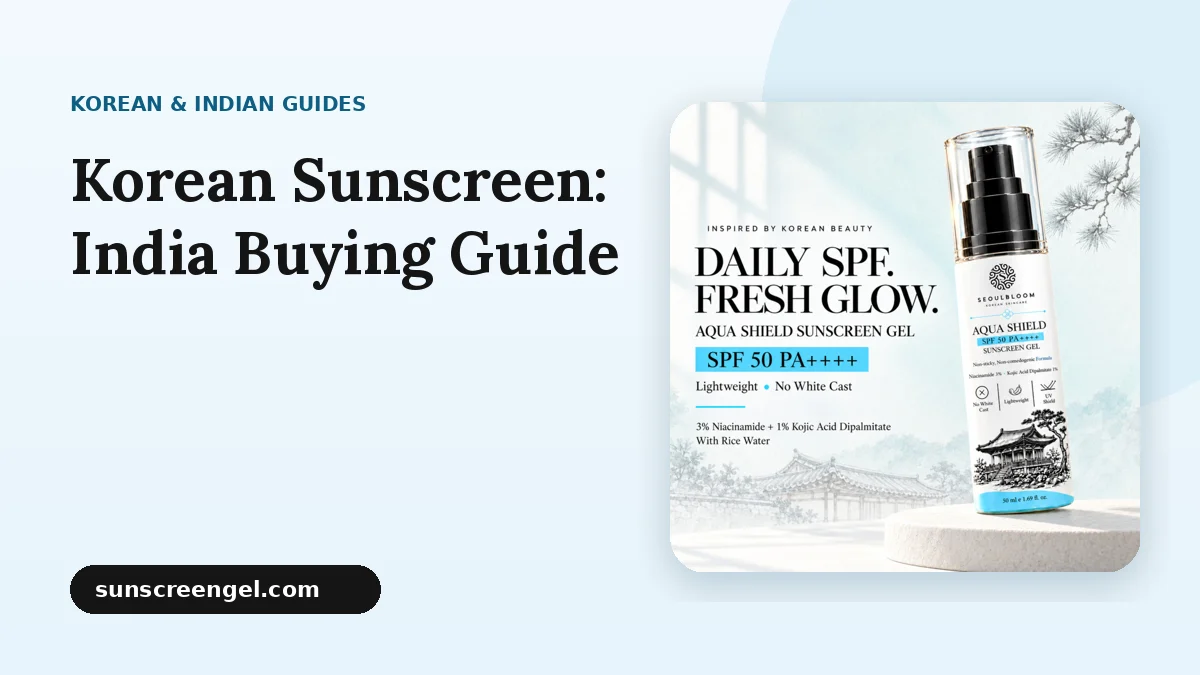
SeoulBloom Aqua Shield SPF 50 PA++++ Sunscreen Gel
A lightweight, non-sticky sunscreen gel built for everyday Indian weather. It blends without a white cast and adds 3% niacinamide and 1% kojic acid dipalmitate for more even-looking skin.
₹799 ₹999 · 60 ml
Topic hubs
Everything about sunscreen, in one place
Nine in-depth hubs cover the science, the products and the everyday questions — with new guides every day.
Sunscreen 101
Three rules that matter more than the brand
SPF 30 or higher
Choose broad-spectrum SPF 30+ — the baseline the American Academy of Dermatology recommends. SPF 50 PA++++ gives more margin in Indian sun.
Use enough
Two finger-lengths for face and neck. Most people apply too little, which quietly lowers real protection.
Reapply
About every two hours outdoors and after sweating or swimming. See our how-to-use guides.
Free tools & references
Make smarter sunscreen choices
From the blog
Latest sunscreen guides
FAQ
Sunscreen questions, answered
Is it necessary to wear sunscreen indoors?
If you sit near windows or step out during the day, yes. UVA passes through window glass, so a morning layer is the simplest habit.
How much sunscreen should I apply on my face?
About two finger-lengths covers the face and neck. Most people apply too little, which lowers real protection.
Can I use sunscreen if I have acne-prone skin?
Yes. Choose an oil-free, fragrance-free, non-comedogenic gel sunscreen.
What is the difference between SPF 30 and SPF 50?
SPF 30 filters about 97% of UVB rays and SPF 50 about 98%. SPF 50 leaves more margin when you under-apply.
What is the best sunscreen for Indian skin?
The best sunscreen is a broad-spectrum SPF 30–50 with PA+++ or PA++++ in a texture you will wear daily. Oily skin usually prefers gels; dry skin prefers creams or cream-gels.
Is sunscreen gel better than sunscreen cream?
Neither is universally better. With the same SPF and PA, both protect equally; gels suit oily skin and humidity, creams suit dry skin.
Which SPF should I use in India?
Use at least SPF 30 daily. For long hours outdoors in strong Indian sun, choose SPF 50 with PA++++.
Do I need sunscreen indoors or on cloudy days?
Yes. UVA passes through window glass and clouds, so a daily morning habit is the simplest approach.
How often should I reapply sunscreen?
Reapply about every two hours outdoors, and straight after sweating, swimming or wiping your face.